Do-It-Yourself-1: Welcome, Math Explorers! Let’s Master Mental Math Together!
Today, we’re going to unlock the power of mental math, specifically focusing on how to add numbers quickly in your head. Our special strategy is called “Making Tens,” which helps us create friendly numbers that are easy to work with. To start, let’s build a concrete model together. This hands-on approach will help you truly understand the strategy.
Here’s what you need to gather to build your own model:
- Small Counting Objects: Find at least 15 small, identical items. These could be small building blocks, buttons, pebbles, bottle caps, or even small coins. We’ll use these to represent our numbers.
- Two Small Containers/Circles: You’ll need two distinct areas to place your objects. You can use two small bowls, draw two circles on a piece of paper, or just clear two spots on your desk.
Ready? Let’s begin to build our understanding!
Do-It-Yourself-2: Set Up Your Numbers
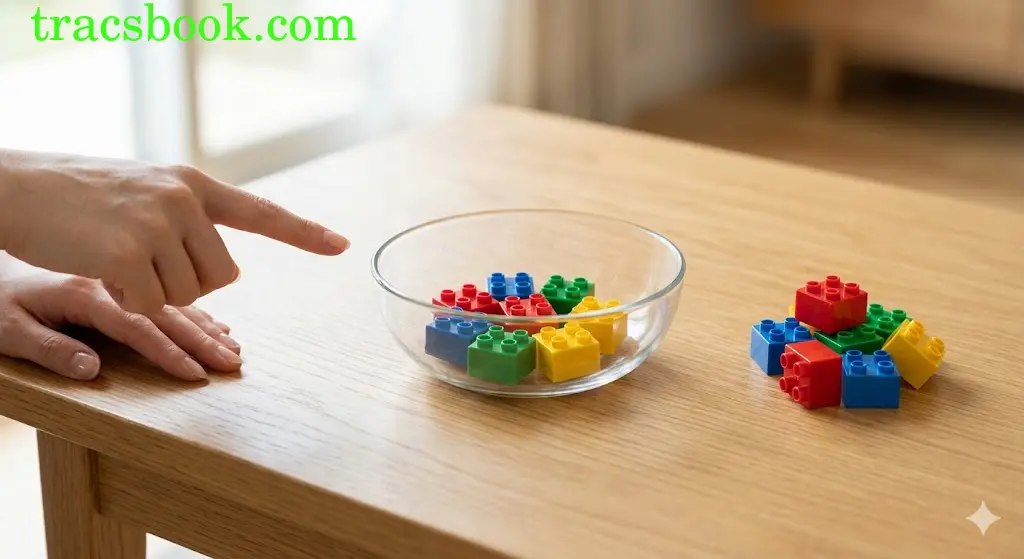
Let’s work with an example: 8 + 5. This is a common problem where “Making Tens” can really help.
- Represent the First Number: In your first container or circle, carefully count out 8 of your small counting objects. Take your time to make sure you have exactly 8.
- Represent the Second Number: In your second container or circle, count out 5 of your small counting objects. Keep these two groups separate for now.
Now, look at your first group of 8. Can you imagine how many more objects you would need to make that group a full group of 10? Think about it! If you have 8, how many more do you need to reach 10? We call this finding the “number bond” to 10.
Do-It-Yourself-3: Make a Group of Ten!
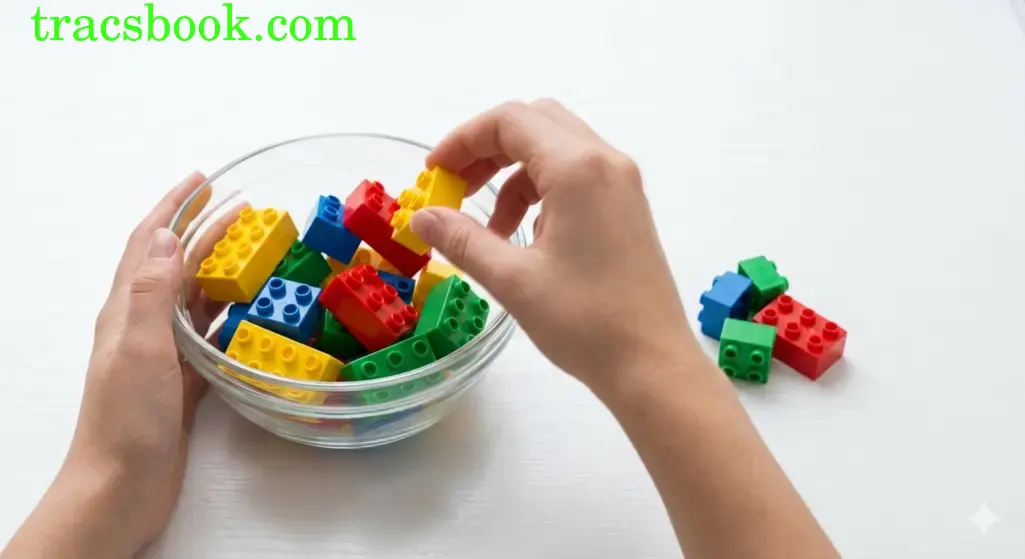
This is where the magic happens!
- Identify the ‘Missing’ Pieces: To get from 8 to 10, you need 2 more objects (because 8 + 2 = 10).
- “Borrow” from the Second Number: Now, carefully take 2 objects from your second group (the one with 5 objects).
- Complete Your Ten: Move those 2 objects and add them to your first group (the one that started with 8 objects).
- Observe Your New Groups: Look at your containers now. Your first container should have exactly 10 objects. How many objects are left in your second container? You started with 5, took away 2, so you have 3 objects left (5 – 2 = 3).
So, you’ve transformed 8 + 5 into 10 + 3! How much is 10 + 3? It’s 13! Much easier, right? Build your own model and practice this transformation.
Design-It-Yourself-1: Visualizing “Making Tens”
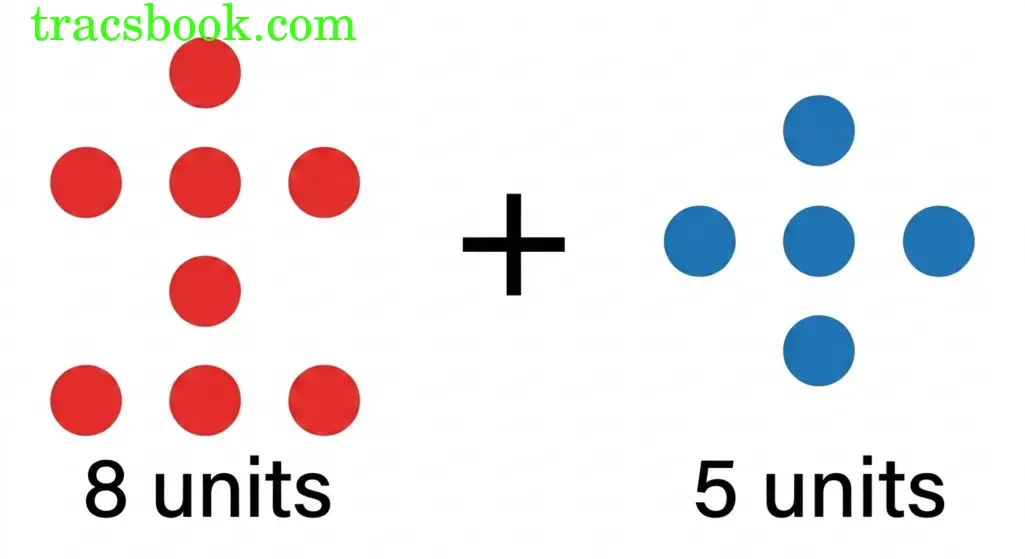
Now that you’ve built the model with your own hands, let’s transform that physical action into a visual drawing. Imagine the objects as dots or circles. This helps us see the strategy clearly on paper or a screen, moving from concrete objects to a picture.
Here’s how we initially see 8 + 5 represented visually:
- Group 1: Eight Units
- This group is represented by 8 individual circles or dots.
- It clearly shows the starting quantity before any mental operation.
- Group 2: Five Units
- This group is represented by 5 individual circles or dots.
- It shows the quantity we need to add to the first group.
Seeing the numbers this way helps us grasp the initial quantities and mentally prepare for the ‘making ten’ transformation.