Do-It-Yourself-1: Welcome, budding mathematicians!
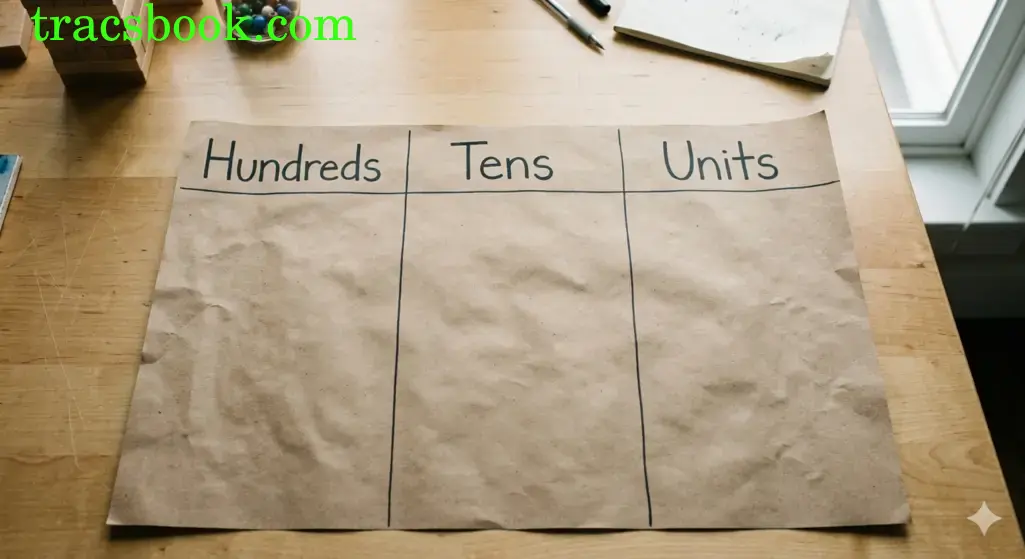
Today, we’re going on an exciting journey to master multi-digit addition and subtraction, especially when numbers need to share or borrow from their neighbors. We call this ‘regrouping’, and it’s a super important skill. To truly understand it, we’ll start by building our own mathematical models. Build your own model!
To begin our concrete phase, gather these simple, everyday items that you can find almost anywhere in the world:
- Small, identical objects: Around 50-60 pieces of dried beans, small pebbles, buttons, or even small coins (like pennies or cents). These will represent our “units.”
- Strips of paper or small sticks: About 10 pieces. These will represent our “tens.”
- Larger pieces of paper or small cardboard squares: About 5 pieces. These will represent our “hundreds.”
- A large sheet of paper or a flat surface: To create your workspace.
- A marker or pencil: To label your workspace.
Do-It-Yourself-2: Setting Up Your Place Value Board
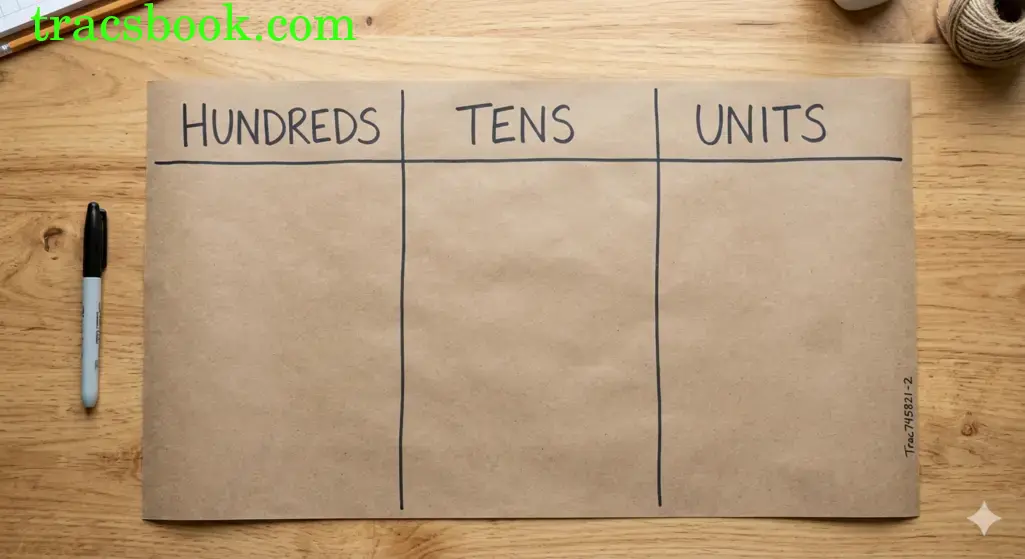
Now, let’s organize your workspace. Take your large sheet of paper or use a section of your flat surface.
- Draw three clear columns: Use your marker or pencil to draw two vertical lines, dividing your workspace into three distinct sections.
- Label your columns: Starting from the rightmost column, label it “Units.” The middle column should be labeled “Tens,” and the leftmost column “Hundreds.”
- Understand the value: Each object you place in the “Units” column represents a value of 1. Each strip of paper in the “Tens” column represents a value of 10. Each cardboard square in the “Hundreds” column represents a value of 100.
This setup is crucial because it visually represents the ‘place value’ of each digit in a number.
Do-It-Yourself-3: Demonstrating Regrouping with Your Model
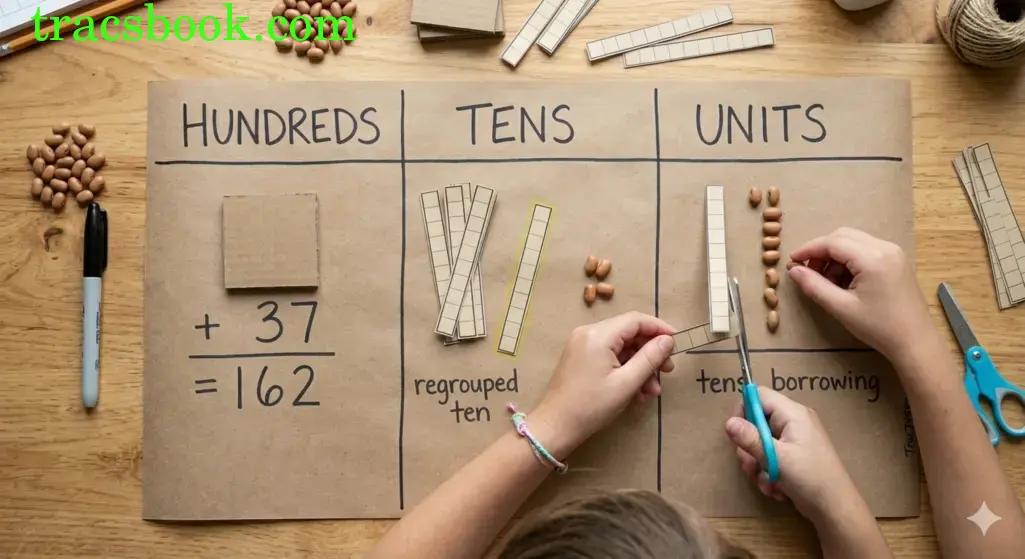
Let’s try an addition problem: 125 + 37.
- Represent 125: Place 1 cardboard square in “Hundreds,” 2 paper strips in “Tens,” and 5 beans in “Units.”
- Represent 37: Add 3 more paper strips to “Tens” and 7 more beans to “Units.”
- Start with Units (Regrouping for Addition): Count the beans in the “Units” column. You have 5 + 7 = 12 beans. Since 10 units make 1 ten, remove 10 beans. Replace them by adding 1 paper strip to your “Tens” column. You are left with 2 beans in “Units.” This is ‘regrouping’!
- Move to Tens: Count the paper strips in the “Tens” column (the original 2 + 3 from 37 + the 1 new strip from regrouping). You have 2 + 3 + 1 = 6 strips.
- Move to Hundreds: Count the cardboard squares. You have 1 square.
The total is 162.
Now, try a subtraction problem: 162 – 37.
- Represent 162: Place 1 cardboard square in “Hundreds,” 6 paper strips in “Tens,” and 2 beans in “Units.”
- Start with Units (Regrouping for Subtraction): We need to subtract 7 units, but you only have 2 beans. So, you need to ‘borrow’ from the Tens column. Take 1 paper strip from “Tens” and replace it with 10 beans in the “Units” column (because 1 ten equals 10 units). Now you have 12 beans in “Units.”
- Subtract Units: Remove 7 beans from the “Units” column. You are left with 5 beans.
- Move to Tens: You had 6 strips, borrowed 1, leaving 5. Now subtract 3 strips. Remove 3 strips from the remaining 5. You are left with 2 strips.
- Move to Hundreds: You had 1 square, and you don’t need to subtract any hundreds. You are left with 1 square.
The result is 125. This hands-on experience shows how numbers exchange values across columns.
Design-It-Yourself-1: Visualizing Place Value with Blocks
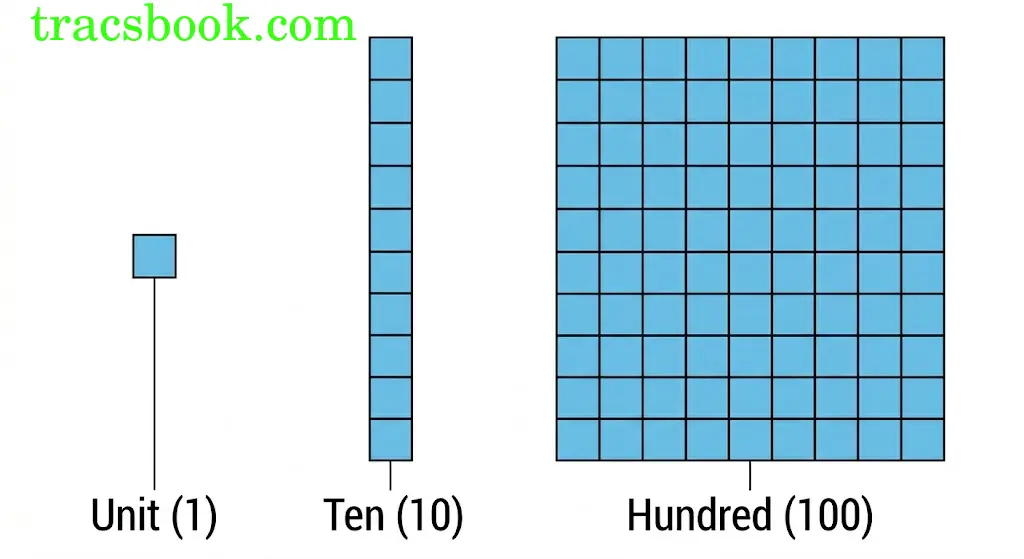
Now that you’ve built and manipulated physical objects, let’s transition to a visual representation that captures the same logic. Imagine we’re using “base-ten blocks.”
- Small squares: Each small square represents 1 unit (ones place).
- Long rods: Each long rod represents 10 units (tens place). Think of it as 10 small squares joined together.
- Large flats: Each large flat represents 100 units (hundreds place). Think of it as 10 long rods joined together, or 100 small squares.
This visual system allows us to represent multi-digit numbers efficiently and see their place value components at a glance. For example, the number 234 would be represented by 2 large flats, 3 long rods, and 4 small squares.