Do-It-Yourself-1: Concrete Model – Building Your Estimation Station
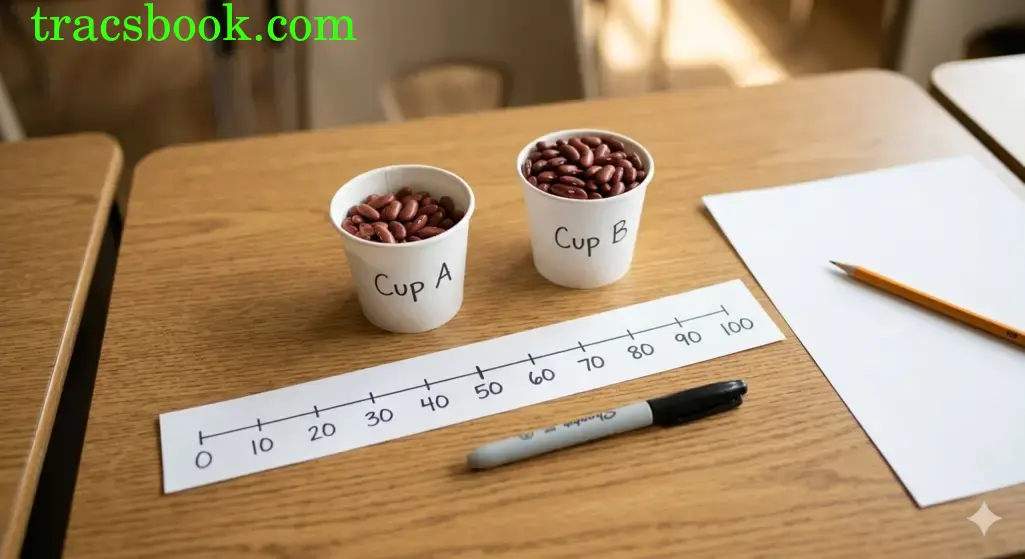
Welcome, mathematicians! Today, we’re going to become expert estimators, learning how to make smart guesses about numbers. Estimation is a super useful skill in daily life, like when you’re trying to figure out how many snacks you need for a party or how long it will take to read a new book. We’ll start by building a hands-on “Estimation Station” to truly understand how numbers work. Build your own model!
Materials you will need:
- Around 100 small, identical objects (like dried beans, pasta shapes, buttons, or paper clips).
- Two small paper cups or bowls.
- One long strip of paper (about 30-50 cm long).
- A marker or pencil.
- A piece of scrap paper and a pencil for recording.
Do-It-Yourself-2: Setting Up Your Number Line and Mystery Cups
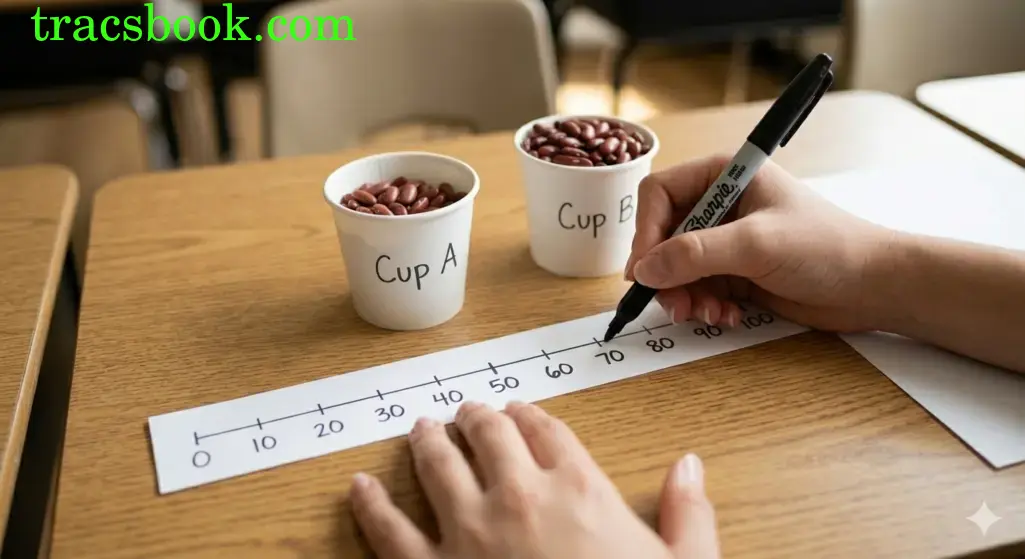
First, take your long strip of paper. This will be your “Rounding Line.” Using your marker, draw a number line on it. Start at 0, and make clear markings for every ten: 10, 20, 30, 40, 50, 60, 70, 80, 90, and 100. Make sure the markings are evenly spaced. Now, take your two paper cups. Into “Cup A,” put a handful of your small objects, aiming for somewhere between 30 and 40 objects – but don’t count them precisely! Just make a good guess. Into “Cup B,” put another handful, aiming for between 50 and 60 objects. Again, don’t count them exactly. These are your mystery numbers!
Do-It-Yourself-3: Estimating and Combining
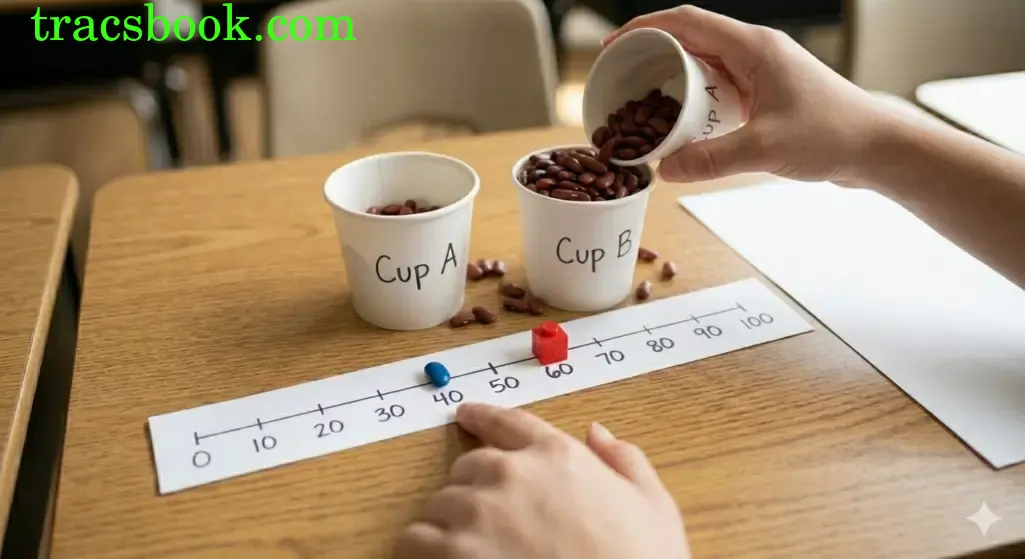
Now, let’s estimate! Look at the objects in Cup A. Without counting each one, try to make a quick “smart guess” about how many there are. Is it closer to 30 or 40? Place a small pebble or another counter on your “Rounding Line” to mark where you think the number for Cup A would be, and then round it to the nearest ten. Write down your rounded estimate for Cup A. Do the same for Cup B: estimate how many objects are inside, mark it on your line, and round it to the nearest ten. Write down that rounded estimate too. Finally, gently pour all the objects from Cup A into Cup B. Now, look at the combined pile. Can you estimate the total number of objects? Place your marker on the “Rounding Line” for the total and round it to the nearest ten. What is your estimated sum?
Design-It-Yourself-1: Pictorial Logic – Visualizing Rounding
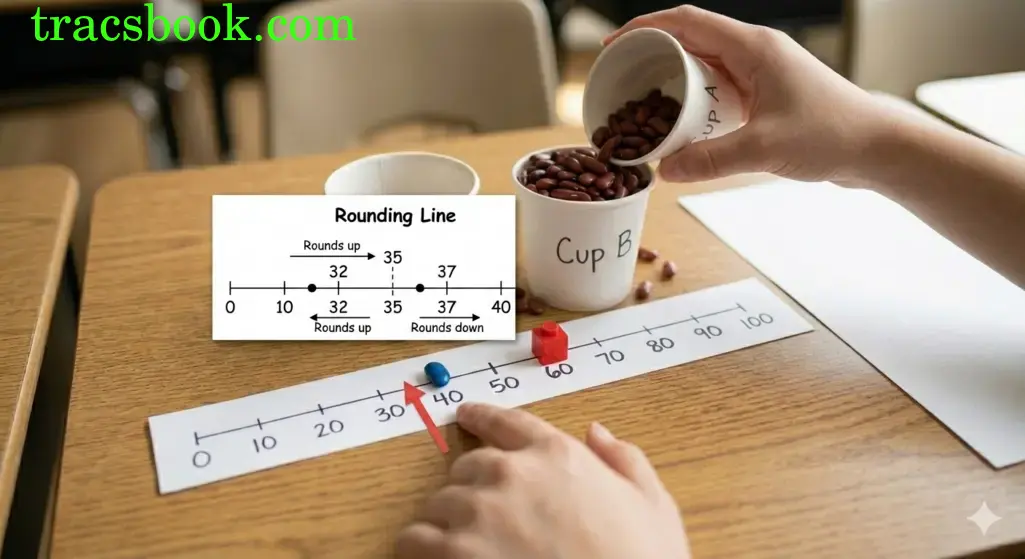
Fantastic work with your physical models! Now, let’s translate that concrete experience into visual diagrams. Imagine your beans or buttons as dots on a page, and your rounding line as a clearer, more precise tool for making those smart guesses. When we estimate sums and differences, a key step is often “rounding” numbers.
Visualizing Rounding to the Nearest Ten:
- Look at a number on a number line.
- Identify the two tens it lies between. For example, 37 is between 30 and 40.
- Find the exact middle point between those two tens (e.g., 35 is halfway between 30 and 40).
- If the number is halfway or greater (5 or more in the ones place), it “rounds up” to the next ten.
- If the number is less than halfway (4 or less in the ones place), it “rounds down” to the previous ten.