Do-It-Yourself-1: Welcome, Young Mathematicians! Let’s Explore Roman Numerals!
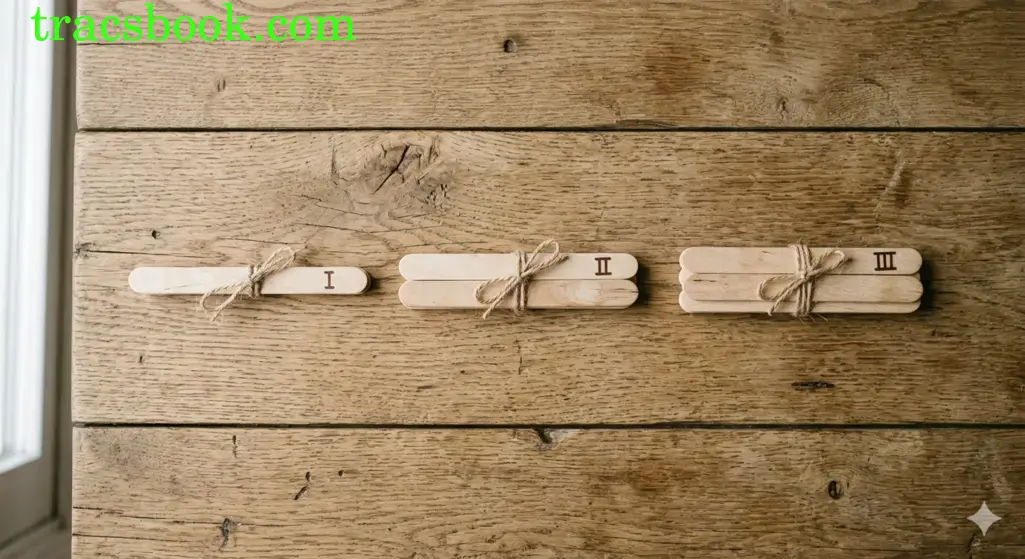
Today, we are going on an exciting journey to discover an ancient way of counting called Roman Numerals. Imagine a time long, long ago when people didn’t use the numbers we use today (0, 1, 2, 3…). They had a special system using letters! We’re going to build our own Roman Numeral system using simple objects. This will help us truly understand how it works. Are you ready to build? Let’s begin!
Your Task: Build your own model!
- Gather Your Tools: Find some small, identical items around you. Craft sticks, pencils, toothpicks, or even small, flat stones or buttons work perfectly. Let’s start with at least twenty of these items.
- Representing ‘One’: Take one of your items. This single item represents the number 1. In Roman numerals, we use the letter ‘I’ for this. So, one stick = 1 = I. If you want to show the number 2, how many sticks would you need? That’s right, two sticks! And for 3? Three sticks! We write these as II and III.
Do-It-Yourself-2: Introducing ‘Five’: A Special Group
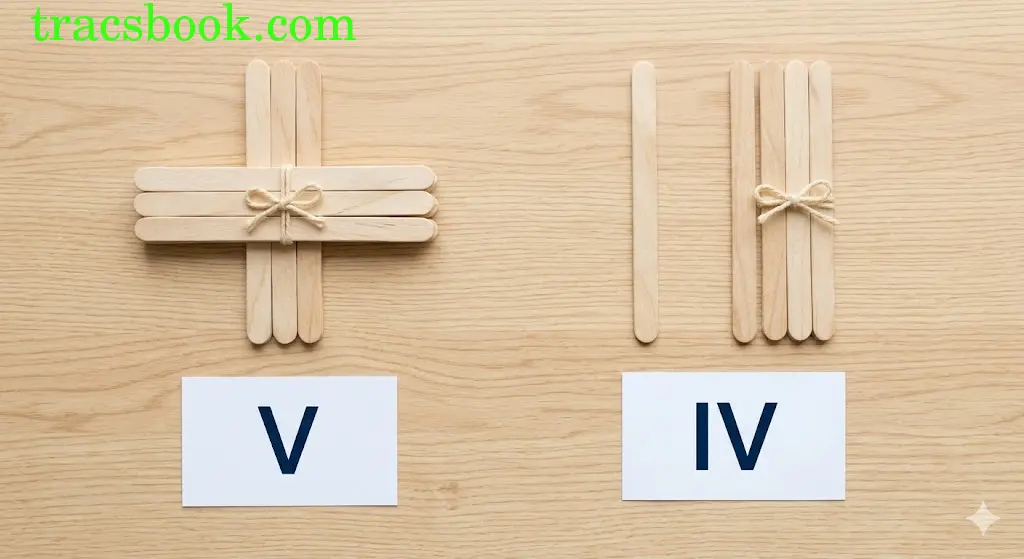
Now, what happens when we want to show the number 4 or 5? If we keep adding sticks, it can get a bit messy and hard to count quickly. Roman numerals have a clever trick for this!
Your Task: Build your own model!
- Grouping for Five: Take five of your items (e.g., five craft sticks). Now, imagine tying them together or placing them in a small group. This group of five sticks will represent the number 5.
- The ‘V’ Symbol: In Roman numerals, the letter ‘V’ stands for 5. So, your group of five sticks is your ‘V’. This is important because instead of writing IIIII for five, we simply use V.
- Making Four: How do we make 4? Do we just take one stick away from V? Not quite! Roman numerals have a special rule. For 4, you place one stick (I) before your group of five (V). So, ‘IV’ means 5 minus 1, which equals 4. Try making this with your sticks: one stick placed slightly to the left of your group of five sticks.
Do-It-Yourself-3: Introducing ‘Ten’: Double the Fun!
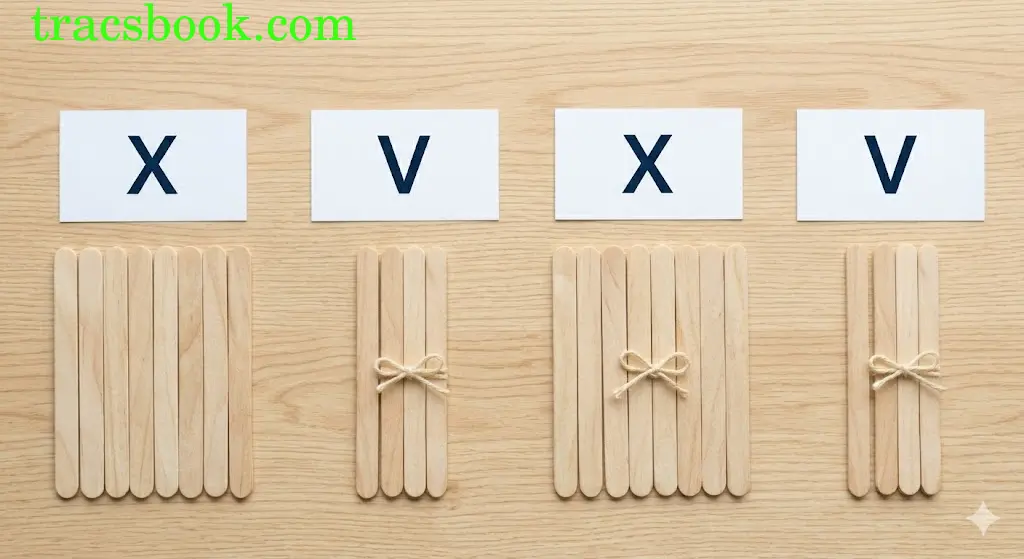
You’ve mastered ‘I’ and ‘V’! Now let’s go bigger. What happens when we have two groups of five, or ten individual items?
Your Task: Build your own model!
- Grouping for Ten: Take two of your ‘V’ groups (or ten individual items). Arrange them neatly together. This big group represents the number 10.
- The ‘X’ Symbol: In Roman numerals, the letter ‘X’ stands for 10. So, your two ‘V’ groups or ten items become your ‘X’.
- Combining for Greater Numbers: Now, let’s combine what we’ve learned!
- To make 6 (VI): Take your ‘V’ group and place one ‘I’ stick after it. (5 + 1 = 6)
- To make 9 (IX): Take your ‘X’ group and place one ‘I’ stick before it. (10 – 1 = 9)
- To make 11 (XI): Take your ‘X’ group and place one ‘I’ stick after it. (10 + 1 = 11)
- To make 15 (XV): Take your ‘X’ group and place your ‘V’ group after it. (10 + 5 = 15)
- To make 19 (XIX): Take your ‘X’ group, then an ‘I’ stick before another ‘X’ group (or before your ‘V’ and four ‘I’s, but the IX rule is better). (10 + (10 – 1) = 19)
- To make 20 (XX): Simply put two ‘X’ groups together! (10 + 10 = 20)
Build all these numbers with your items! This physical building helps you understand the rules in a hands-on way.
Design-It-Yourself-1: Seeing the Numbers: I to V
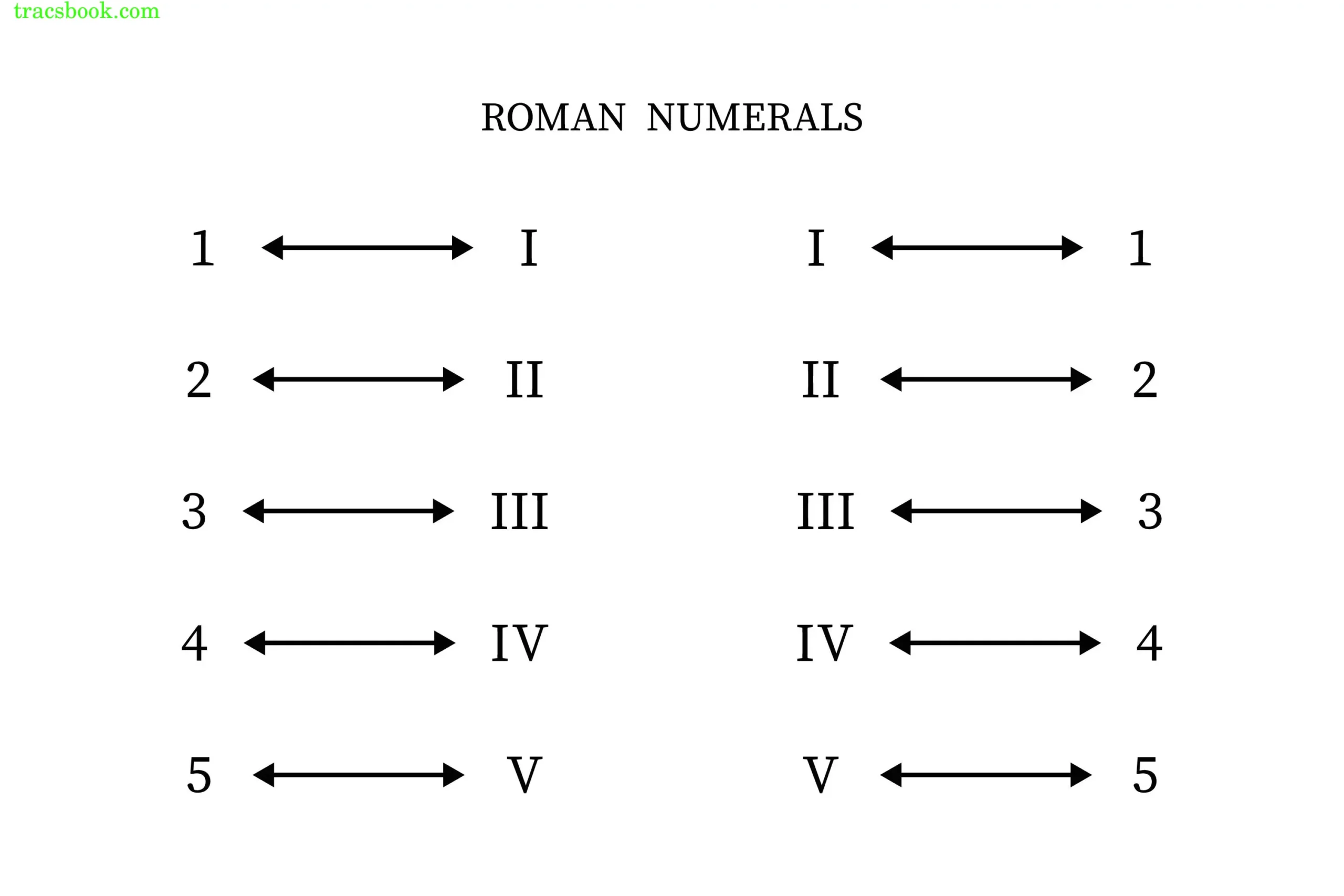
Now that you’ve built the numbers with your own hands, let’s look at them as clear pictures. This helps us to see the patterns and rules without needing the physical objects in front of us. Imagine the items you used, but now drawn on a page.
- I = 1: A single vertical line. Simple and direct.
- II = 2: Two vertical lines next to each other.
- III = 3: Three vertical lines next to each other.
- IV = 4: Here’s our first special rule visually! You see the ‘I’ before the ‘V’. This means “one less than five.”
- V = 5: A distinct ‘V’ shape. This is our primary symbol for five. It’s like a benchmark or a waypoint.
Observation: Notice how ‘I’ can be repeated up to three times (I, II, III). After three, we start to use the ‘V’ symbol with a clever subtraction trick for four.