Do-It-Yourself-1: Model Building – Your Number System
Hello, mathematicians! Today, we’re going on an exciting journey to explore numbers up to 10000. We’ll start by building our very own number system with everyday items. This will help you feel and see what these big numbers truly mean. We will learn to represent numbers using the brilliant Concrete-Pictorial-Abstract (CPA) model. Let’s begin with the Concrete phase!
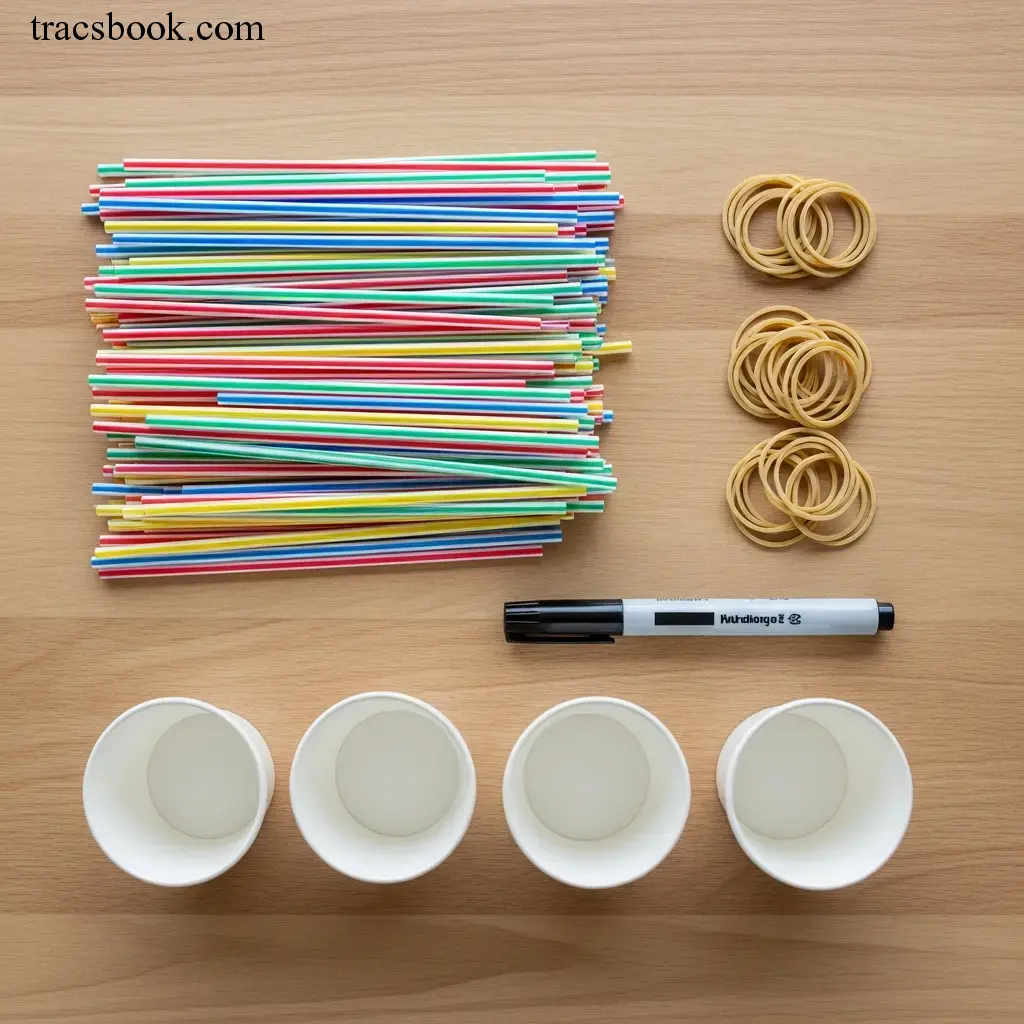
For this phase, you will need:
- Approximately 200 thin drinking straws or toothpicks.
- Several small rubber bands.
- Four small paper cups or containers.
- A permanent marker.
Build your own model! Get your materials ready, and let’s construct our number system step-by-step.
Do-It-Yourself-2: Constructing Units, Tens, and Hundreds
Let’s start with the smallest building blocks!
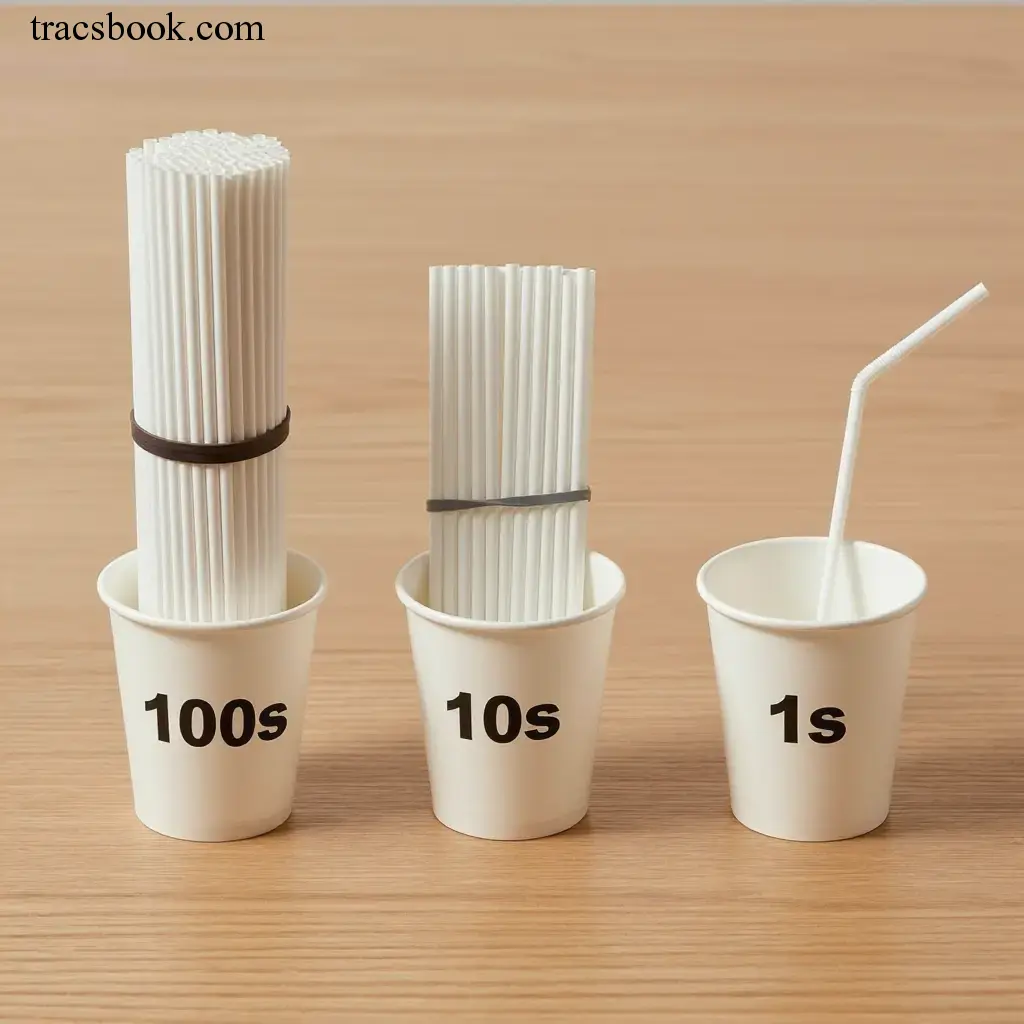
- Units (Ones): Take a single straw. This represents 1 unit (or one). Write “1s” on one of your paper cups.
- Tens: Count out 10 straws. Use a rubber band to carefully bundle them together. This bundle represents 1 Ten. Think of it: 10 ones make 1 ten. Place this bundle into a cup labeled “10s”.
- Hundreds: Now, take 10 of your “Tens” bundles. That’s 10 bundles, with 10 straws in each, totaling 100 straws! Use another rubber band (or two, for security) to bundle these 10 tens together. This larger bundle represents 1 Hundred. Place it into a cup labeled “100s”.
You’re building the foundation of our place value system!
Do-It-Yourself-3: Building a Thousand
Fantastic work so far! Now, for the biggest leap: the Thousands.
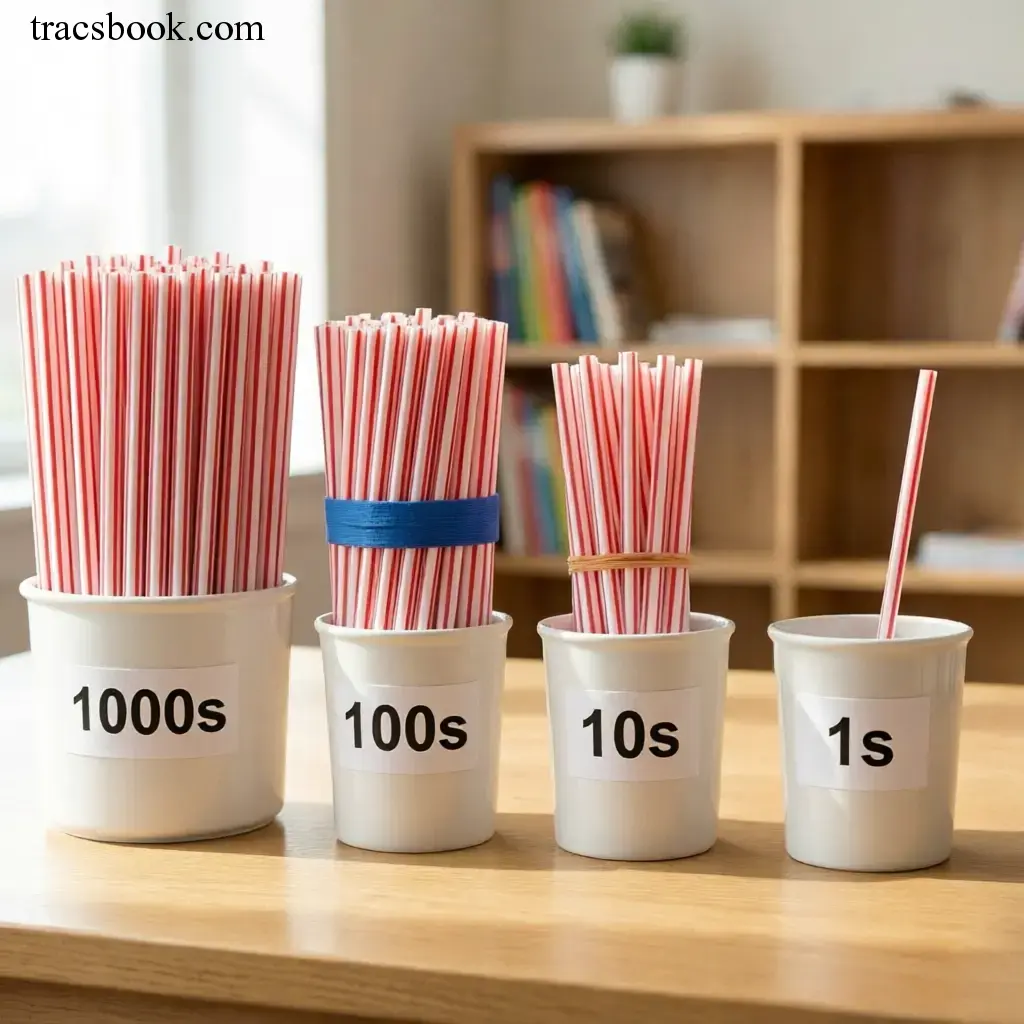
- Thousands: Imagine taking 10 of your “Hundreds” bundles. That’s 10 bundles, each containing 100 straws! Count them: 10 x 100 = 1000 straws. Secure these 10 hundred-bundles together with a strong rubber band. This massive bundle now represents 1 Thousand. Place this into your last cup, labeled “1000s”.
Congratulations! You have just constructed a physical representation of our number system, showing the relationship between units, tens, hundreds, and thousands. Notice how each group is made up of 10 of the group before it. This is the power of our base-10 number system!
Design-It-Yourself-1: Pictorial Representation – Visualizing Numbers
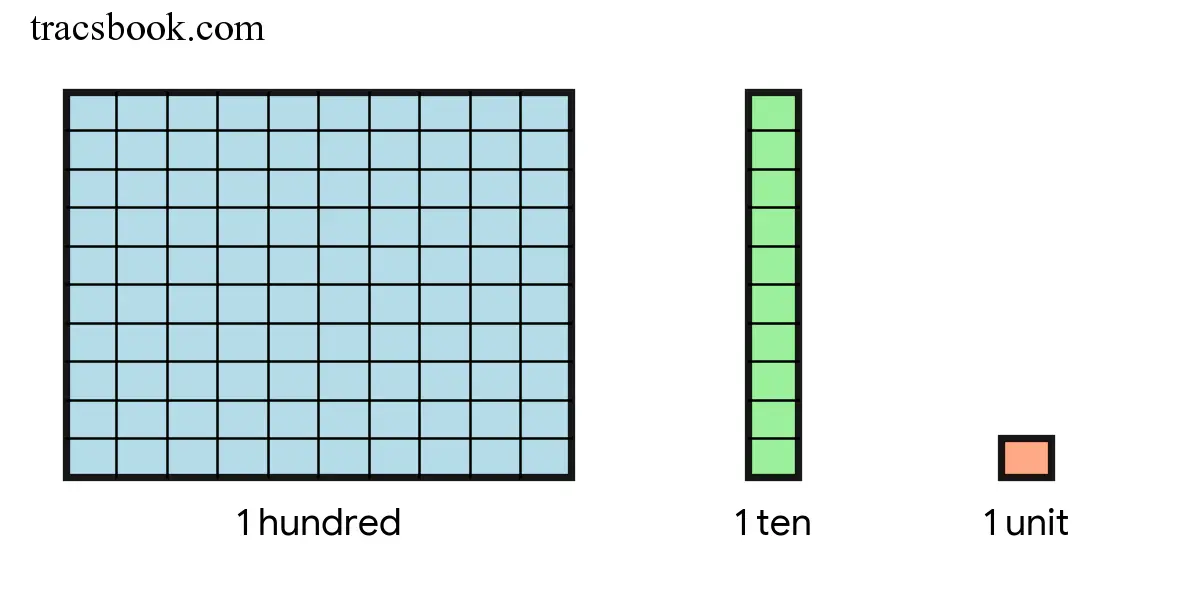
Now that you’ve built your physical models, let’s transition to the Pictorial phase. Here, we will draw what we’ve just built. Imagine replacing your straw bundles with simple, clear drawings. This helps us visualize numbers without needing to build them every time!
- Units (Ones): We represent a single unit with a small square or a dot.
- Tens: A bundle of ten units is shown as a long rectangular bar, representing 10 small squares joined together.
- Hundreds: A bundle of one hundred units (or ten tens) is drawn as a flat square block, representing 10 ‘tens’ bars joined.
These simple drawings help us easily count and compare numbers!